AI Literacy Curriculum
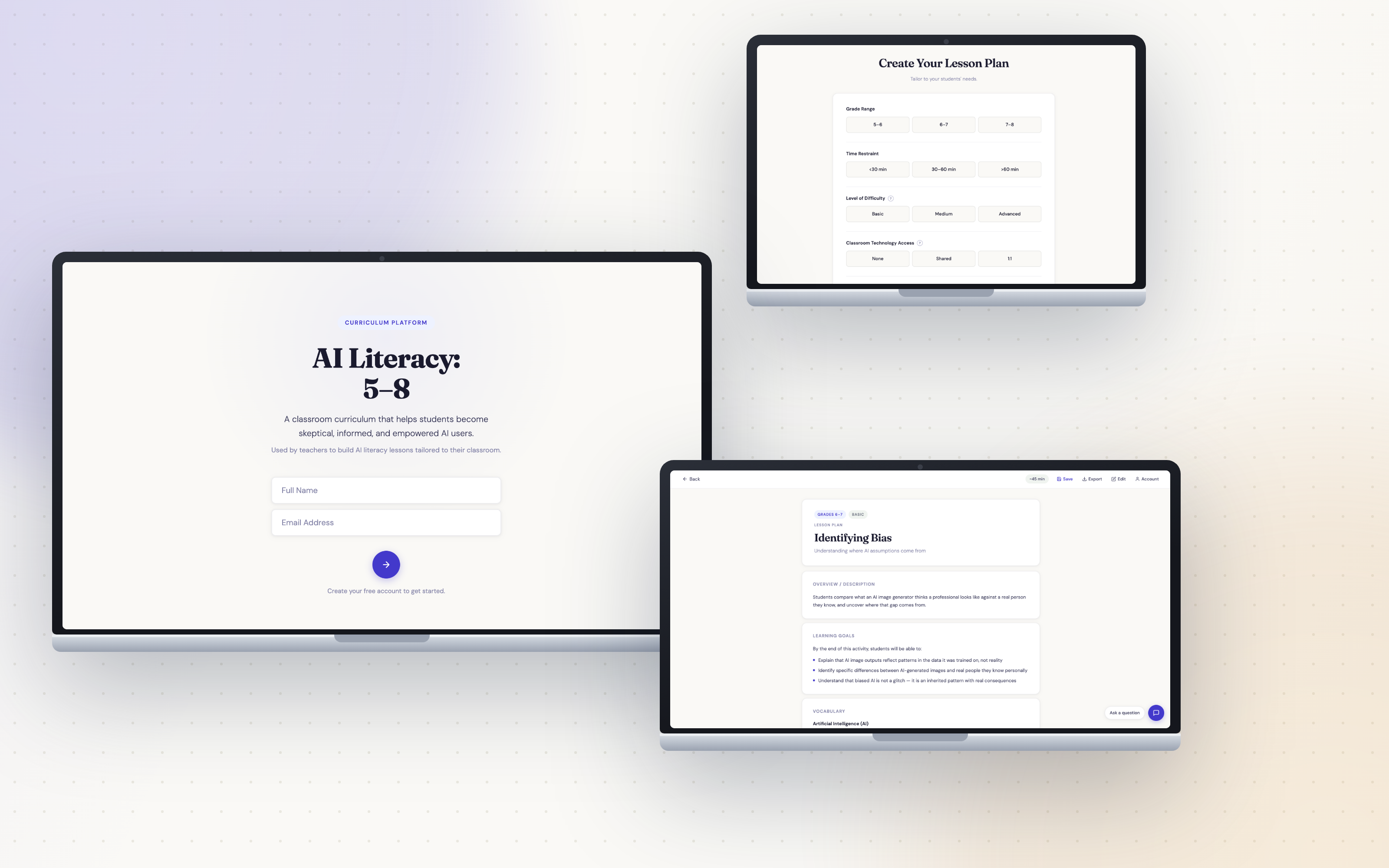
An AI literacy curriculum for grades 5 - 8 that teaches students to recognize hallucinations, bias, and sycophancy in AI through hands-on activities.
01
The Challenge
Middle schoolers use AI every day to write essays, answer questions, generate images, and get recommendations, but almost none have been taught to question it.
Most existing curricula fall into one of two traps: they teach specific tools that will be outdated within a year, or they go so deep into ethics and systems theory that they lose the average 7th grader in the first ten minutes. We wanted something in between: AI is not magic, and it's not always right. It's a tool that's only as good as the data it was trained on and the way you interact with it.
02
Discovery & Insights
Competetive Analysis
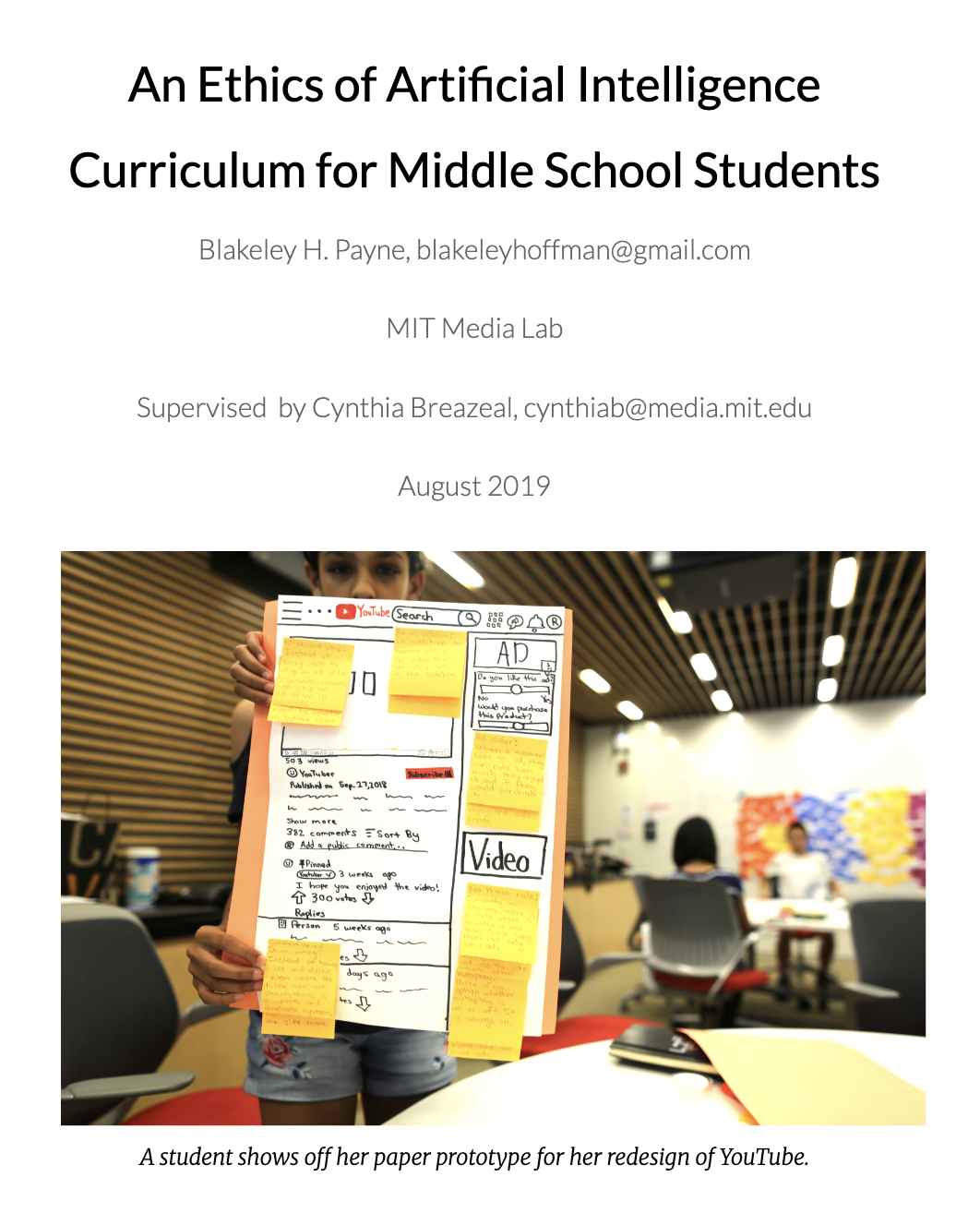
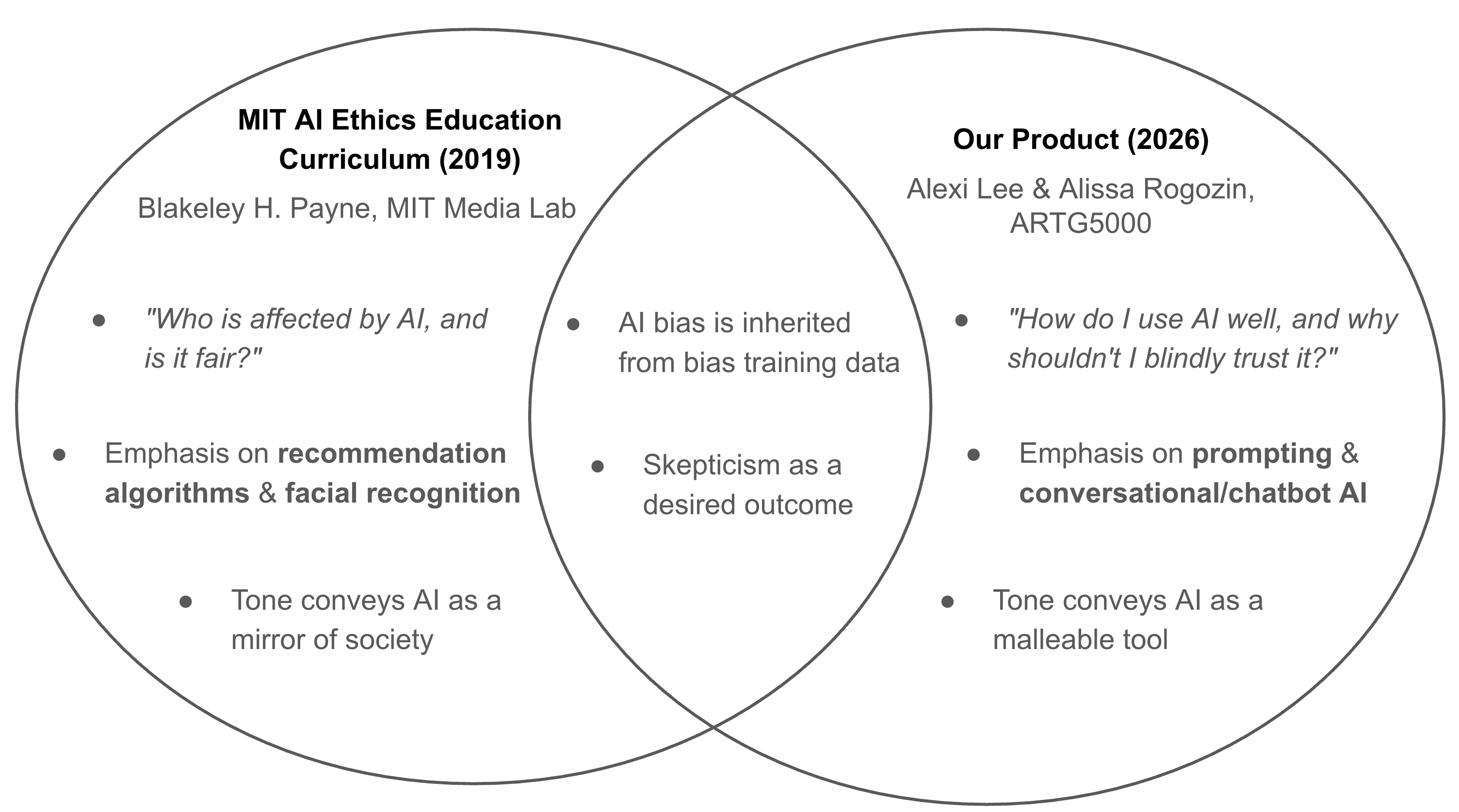
We benchmarked our approach against the MIT AI Ethics Education Curriculum, the leading framework in this space. MIT focuses on whether AI is fair, emphasizing bias in recommendation systems and facial recognition. We identified a gap: kids don't know how to use AI well, or why it fails them, which became our core differentiator.
User Validation
Preliminary validations with two middle school teachers was done to stress-test the activities before scaling further. Feedback surfaced issues around pacing, handling sensitive topics like bias, and adapting to non-traditional classroom formats.
Key takeaway
Across validations, teachers wanted a curriculum tailored to their specific classroom, not a rigid, one-size-fits-all package. This finding directly shaped the design decisions that follow.
03
Design Process
Phase 1: Curriculum Decisions
Before designing individual activities, we had to decide what this curriculum was not: not a computer science course, not an AI-for-productivity guide, not a fear-mongering cautionary tale. Anchoring on three core goals, precision drives output, AI isn't all-knowing, and AI is moldable, gave every activity a clear filter to design against.
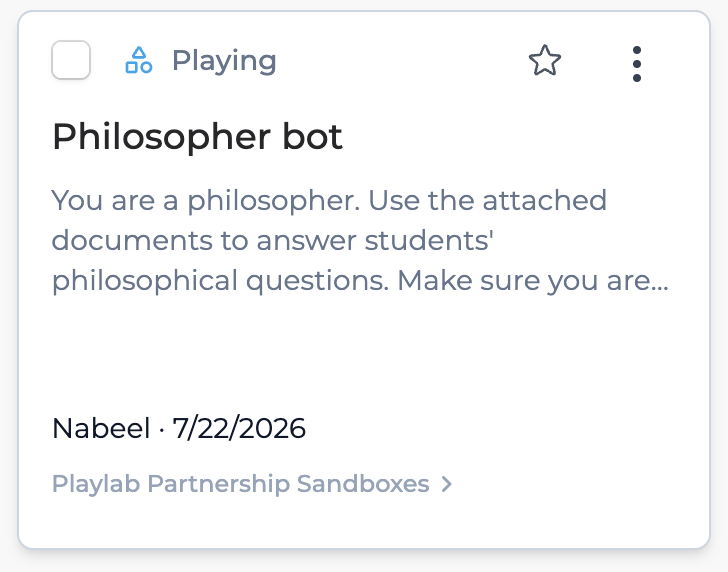
Phase 2: Playing Around with AI Tools
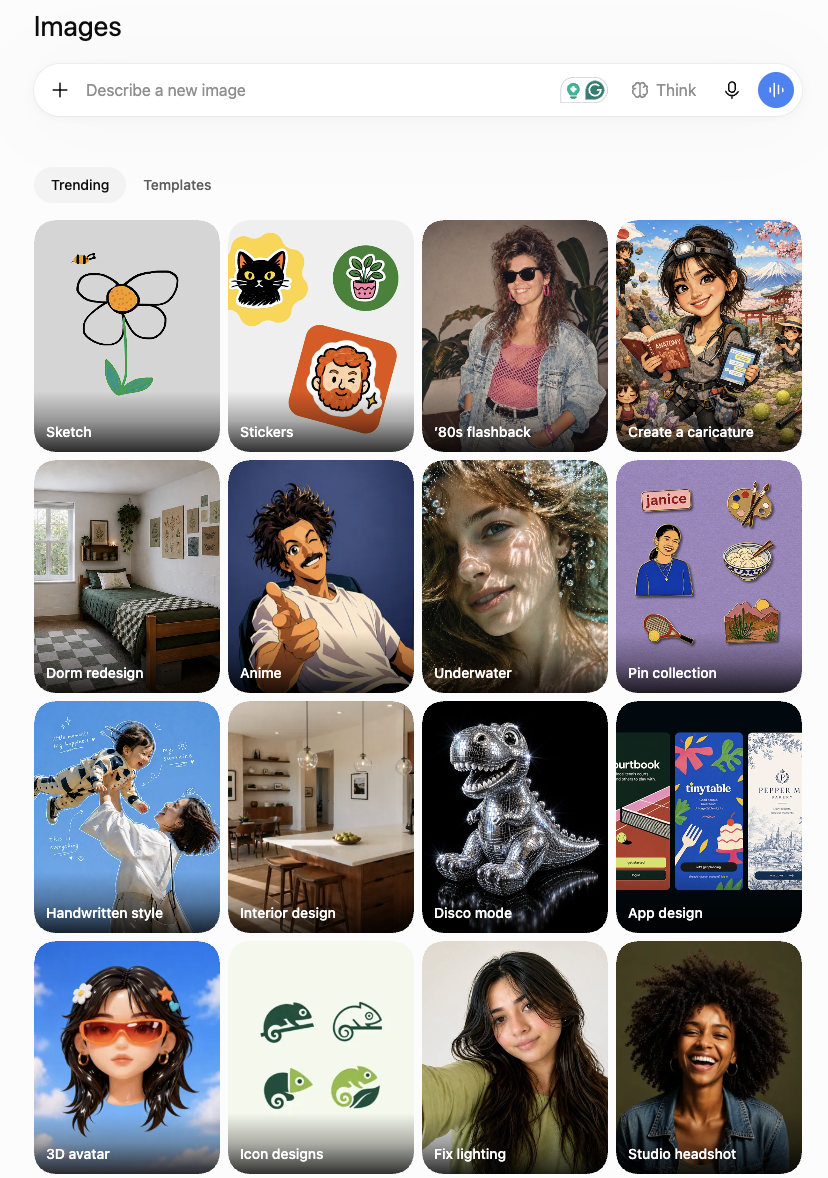
This class explored both AI's role in education and the capabilities of AI tools themselves. We experimented with Claude Code, Playlab, AI image generation, and more to prototype activities. This let us build quick, interactive prototypes to test our concepts without sinking time into production, leaving more room for validation.
Phase 3: Teacher Validation
We conducted interviews with middle school teachers to see where the design held up and where it broke. Feedback on pacing, sensitive topics, and classroom format directly shaped revisions, turning a fixed curriculum into something built to flex around how teachers actually teach.
04
The Solution
Interactive Prototype
Descriptive Prompting, Identifying Bias, and Fact-Checking AI, live and clickable.
05
Reflections
We set out to teach skepticism toward AI, but the curriculum surfaced conversations bigger than AI itself.
The bias activity touches on race and gender in ways that not every teacher will feel equipped to navigate without ground rules and vocabulary established beforehand, a gap we still need to close. We also learned pacing is far less predictable than we assumed: the same activity ran twelve minutes in one classroom and forty-five in another. That pushed us toward building extension prompts for faster-moving classes, not just support for those that need more time.